
Canadians stopped paying attention, but tuberculosis continues to kill more people than any other infection
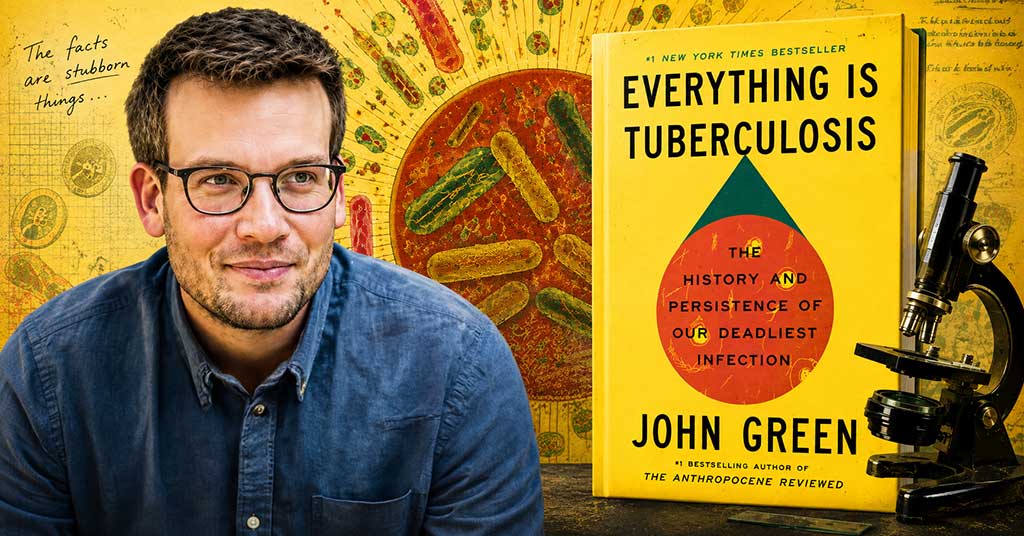
Title: Everything Is Tuberculosis: The History and Persistence of Our Deadliest Infection
Author: John Green
Publisher: Penguin Random House Canada
Publication Year: 2025
(Available from Amazon)
When I picked up John Green’s Everything Is Tuberculosis, I expected to revisit memories of the disease that nearly killed me as a child. Instead, the book reminded me how thoroughly Canadians have forgotten tuberculosis, even though it remains one of the world’s deadliest infectious diseases.
When I was three years old, I spent a year and a half in a tuberculosis (TB) sanatorium fighting for my life. I had pulmonary TB and TB meningitis, a combination that was often fatal. That was more than 75 years ago, but I still remember the sanatorium, especially that it was filled with children fighting for their lives. Some of them did not survive.
When I first saw the title of Green’s book, I thought he had exaggerated. Surely tuberculosis was not “everything.” But after reading it, I came to appreciate how profoundly TB has affected humanity over thousands of years. It remains the world’s deadliest infectious disease, killing more than 1.3 million people every year, mainly in developing countries and in Canada’s North.
Today, however, tuberculosis is rarely discussed in Canada. That was not the case when I was a child. Parents warned their children not to play with youngsters who had recently been released from sanatoria because they feared they might catch this dreaded disease. Their concerns were understandable.
Green’s book explains many important facts about tuberculosis.
One example involves James Watt, the Scottish inventor of the steam engine. Green recounts how Watt tried to develop a chemical treatment for TB, then commonly known as “phthisis,” from the Greek word meaning “wasting” or “consumption.” His efforts were driven by personal tragedy. His daughter, Jessy, died of tuberculosis at age 15 in 1794. A few years later, his son Gregory also died from the disease. Watt’s family was far from unique. Tuberculosis affected countless families and societies.
Green also describes evidence that tuberculosis existed in the Americas long before European settlement. Archaeologists have found the remains of Indigenous people with bone lesions that indicate TB infection. It is believed infected seals may have introduced the disease to the New World, challenging the commonly held assumption that virtually all major infectious diseases arrived with European explorers and settlers.
The book also explains what we now know about tuberculosis itself. TB is caused by an airborne bacterium that can infect people with weakened immune systems.
Green argues that the world we live in has been shaped by this bacterium. In comparison, the COVID-19 virus never came close to producing the deadly effects of the TB bacterium, even though our political and medical leaders often spoke as though COVID would become far worse.
Green explains that the first effective drug against tuberculosis, streptomycin, was developed only in the late 1940s. Fortunately, I became one of the experimental subjects in the early clinical trials. Although the drug had several serious side effects, I escaped the worst of them. Since streptomycin was introduced, however, more than 150 million people have still died from tuberculosis. Green argues that many of those lives could have been saved with proper treatment.
He also explains why tuberculosis remains difficult to control. About one-quarter of infected people recover without treatment. Others die quickly, while some live with the disease for years before it becomes fatal. Still others recover after months or years of treatment.
Tuberculosis is difficult to kill because the bacterium has a thick, fatty cell wall that often prevents white blood cells from destroying it. The immune system frequently surrounds the bacterium, isolating it inside a calcified tubercle where it can survive for years. If a person’s immune system later weakens, the disease can become active again.
The same thick cell wall also slows the ability of drugs to kill the bacterium. As a result, successful treatment often requires many months, and patients were commonly treated in sanatoria for extended periods.
Another reason patients remained in hospital was that streptomycin had to be injected into large muscles, usually the buttocks. I remember a nurse asking me which side I wanted the injection. Both sides were already sore from previous injections, so I told her I did not want it on either side. My request, of course, was politely ignored. Today, I am grateful those painful injections helped save my life.
This book appealed to me because I lived through tuberculosis, but it will also interest anyone curious about how bacteria and viruses have shaped people and societies.
While reading it, I often thought about the recent COVID-19 pandemic and the strategies governments adopted to slow its spread.
COVID was a far less dangerous disease than tuberculosis, yet the political and medical response was dramatically different.
Everything Is Tuberculosis is a short book that reminds readers of the continuing impact of a disease many Canadians rarely think about today. It also raises questions about how our political and medical leaders responded to the COVID-19 pandemic. Thankfully, we are better off today than we were during the height of the pandemic, but we never know when another dangerous pathogen will emerge. Hopefully, our political and medical leaders will be better prepared.
Rodney A. Clifton is a professor emeritus at the University of Manitoba and a senior fellow at the Frontier Centre for Public Policy. He is the co-editor with Mark DeWolf of From Truth Comes Reconciliation: An Assessment of the Truth and Reconciliation Commission Report and co-editor with William Brooks of The Peril of Woke Schools and the Value of Traditional Education.
Explore more on Non-fiction books, Covid-19
The views, opinions, and positions expressed by our columnists and contributors are solely their own and do not necessarily reflect those of our publication.
Troy Media empowers Canadian community news outlets by providing independent, insightful analysis and commentary. Our mission is to support local media in helping Canadians stay informed and engaged by delivering reliable content that strengthens community connections and deepens understanding across the country.

