
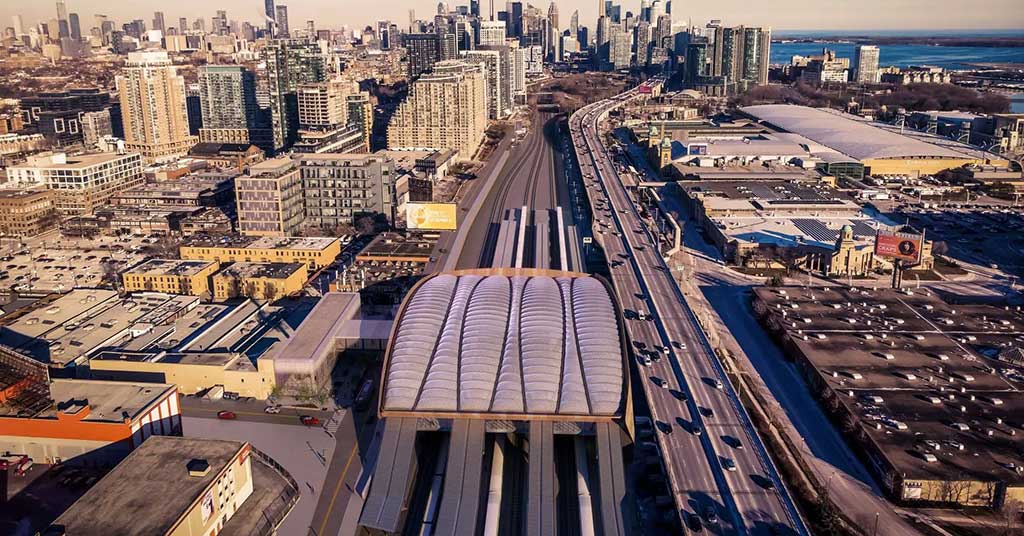
The Ford government priced the Ontario Line at $10.9 billion. Seven years later, taxpayers face a bill of at least $34 billion
At a time when government debt is soaring across the country, it’s time for Canadians to demand that politicians be upfront about the cost of big projects before moving forward with them.
Last week, it was reported that the Ford government’s Ontario Line, a 15.6-kilometre rapid transit project set to run through the heart of Toronto, will cost at least $34 billion.
For context, when the project was first announced back in 2019, the Ford government pegged the cost of the new transit line at $10.9 billion.
In other words, the cost of this transit line has tripled in seven short years. And we’re still at least half a decade away from the project’s completion, meaning costs will surely balloon further still.
The Ford government and Metrolinx, the Crown corporation tasked with building the new transit line, blame supply chain shocks and trade uncertainty for the cost surge.
“When the Ontario Line began as a project, we lived in a different world in respect of major capital project delivery,” said Metrolinx CEO Michael Lindsay.
That may be true. And that may justify part of the spike in the cost of the Ontario Line. But does anyone seriously believe that supply chain and trade issues could cause the cost of the project to more than triple, with further cost increases almost certain to come in the years ahead?
Whatever the explanation, taxpayers were told in 2019 that the Ontario Line would cost $10.9 billion. Today, they’re being told it will cost at least $34 billion. Taxpayers deserve to know how that happened.
Now that the government has already spent billions of taxpayer dollars on the project, taxpayers are past the point of no return. We’re on the hook for the cost of this new rapid transit line, and there’s very little taxpayers can do about it.
But had the public been better informed in 2019, resistance to the Ford government’s proposal would likely have been stronger. Selling the public an infrastructure project with a $10.9-billion price tag is very different from selling the public an infrastructure project that will cost well over $30 billion.
Even transportation researcher Jonathan English, a major proponent of the Ontario Line, told CBC News that it’s hard to determine why the Ontario Line is so expensive “because unlike in other jurisdictions…we don’t have a lot of transparency around what the specific line items are.”
Taxpayers ought to know what’s driving up these costs. We should know what the specific line items are. And there’s no good reason why taxpayers in other jurisdictions receive more information than Ontarians do.
That lack of transparency matters because taxpayers are now committed to a project costing more than three times what they were originally told, without being able to see clearly why.
The Ford government can hide behind Metrolinx when it comes to cost overruns, yet Metrolinx is incredibly secretive and won’t share important cost information with the public.
This arrangement allows politicians to largely get off the hook for this bungled transit line and place the blame on bureaucrats.
But it was the Ford government, back in 2019, that told the public the Ontario Line would cost $10.9 billion. So the Ford government, to a certain extent, must be held to account.
When it comes to major transit projects in the future, governments should be required to show the public independent analysis and clear cost projections when pitching major initiatives to the public. We shouldn’t have to rely on the word of politicians because, far too often, they’re wrong.
Instead, we need to see where these cost projections come from so we can independently assess whether the government is lowballing the cost.
Most importantly, taxpayers need that information before governments commit billions of dollars and projects reach the point where there is little realistic opportunity to turn back.
The present approach, in which governments seem to pick numbers out of a hat and offer the public little to no explanation of where cost estimates come from, cannot continue.
At a time when government debt is soaring, taxpayers deserve full transparency about the costs of government initiatives before they move forward. By the time the bill has tripled and taxpayers are on the hook, that transparency comes far too late.
Dr. Jay Goldberg is a political scientist, a fellow with the Frontier Centre for Public Policy, and a columnist whose work is syndicated in the Toronto Sun and Winnipeg Sun. His policy analysis focuses on fiscal, trade, and energy issues.
Explore more on Transit, Infrastructure, Ford government, Ontario debt and deficit
The views, opinions, and positions expressed by our columnists and contributors are solely their own and do not necessarily reflect those of our publication.
Troy Media empowers Canadian community news outlets by providing independent, insightful analysis and commentary. Our mission is to support local media in helping Canadians stay informed and engaged by delivering reliable content that strengthens community connections and deepens understanding across the country.

