
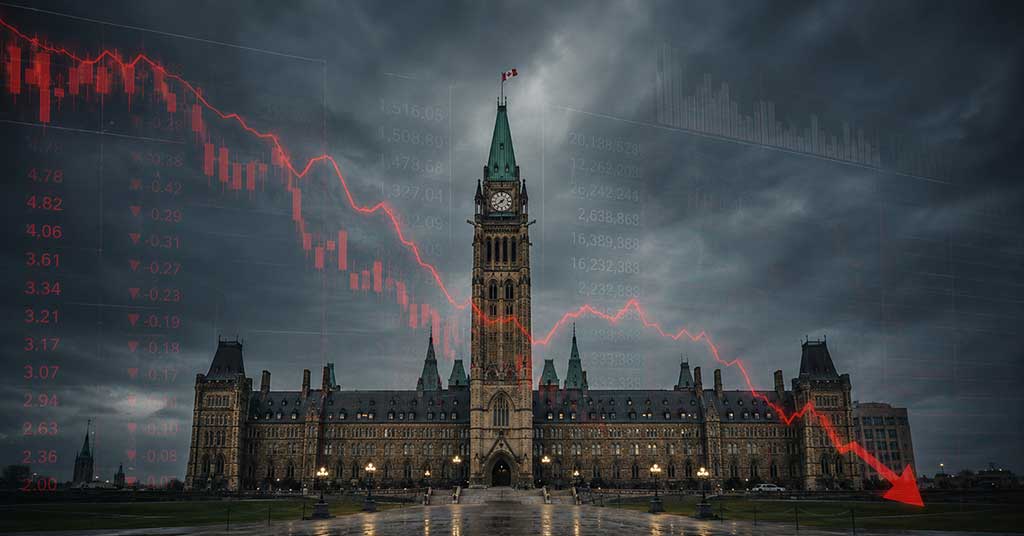
Under Stephen Harper, Canada cut taxes and brought deficits down, proving that our current mess was not inevitable
Canada’s debt problem is not new, and neither is the solution. When Stephen Harper was prime minister, Ottawa cut taxes, restrained spending and balanced the books.
His record points to two clear lessons. Taxes can be cut without driving up long-term debt. And deficits can be reduced and eliminated when governments are willing to restrain spending.
With the recently unveiling of his portrait in Ottawa, his government’s fiscal record is worth revisiting as Canada grapples with a cost-of-living crisis and persistent deficits.
During the 2008-09 global financial crisis, the Harper government ran deficits to stabilize the economy but left office with the budget back in balance. That did not happen by accident. It reflected a deliberate approach to fiscal management rather than a reliance on favourable economic conditions.
One of Harper’s most visible moves was cutting the GST from seven per cent to five per cent. Canadians continue to benefit from that decision. This year alone, taxpayers are saving an estimated $21.8 billion because of the lower GST.
The government also lowered the lowest personal income tax rate, reduced the upper threshold of the two lowest personal income tax brackets, cut corporate tax rates and reduced taxes for small businesses.
Today, more than 40 per cent of Canadians say they are within $200 of not being able to pay their bills. Businesses point to U.S. tariffs and an uncompetitive domestic environment as reasons for shifting investment elsewhere. Against that backdrop, the experience of Harper-era tax reductions remains directly relevant to today’s affordability and competitiveness challenges.
Critics argue that today’s $78.3 billion deficit, along with the deficits accumulated during the Trudeau government’s nine years in office, shows taxes were cut too deeply during the Harper years.
But the record tells a different story.
In his 2015 budget, the Harper government’s final budget before that year’s federal election, then-finance minister Joe Oliver projected a $1.4 billion surplus and balanced budgets into the foreseeable future. Those projections assumed all existing tax reductions would remain in place.
The deficits Canada has experienced since 2015 were not driven by tax relief. They followed the Trudeau government’s stated plan to run a series of modest deficits that expanded far beyond their original scope and ushered in a prolonged period of elevated federal spending.
During the 2008-09 financial crisis, the Harper government ran significant deficits. But those deficits came with a clear plan to return the budget to balance.
The deficit declined from $55.6 billion in 2009-10 to $5.2 billion four years later, a reduction of more than 90 per cent.
Some critics maintain that the pace of deficit elimination during the Harper years was too slow. When compared with current federal plans, however, that approach looks both more deliberate and more effective.
In his November 2025 budget, Finance Minister François-Philippe Champagne projected a deficit of $78.3 billion while offering limited detail on how the government intends to materially reduce, let alone eliminate, the deficit. Four years from now, the deficit is still expected to be $56.6 billion, a reduction of just 28 per cent.
The Harper government’s deficit-reduction strategy was clear and achievable. It showed that governments can do more than simply slow the growth of red ink. With sustained spending restraint, they can restore fiscal balance.
The Harper era demonstrates that tax relief, deficit reduction and responsible fiscal management can coexist. As Canada confronts ongoing affordability pressures and persistent deficits, that experience offers a practical reference point for today’s fiscal choices.
Dr. Jay Goldberg is a political scientist, a fellow with the Frontier Centre for Public Policy, and a columnist whose work is syndicated in the Toronto Sun and Winnipeg Sun. His policy analysis focuses on fiscal, trade, and energy issues.
Explore more on Federal taxes, Federal debt and deficit, Canadian economy, Liberal government
The views, opinions, and positions expressed by our columnists and contributors are solely their own and do not necessarily reflect those of our publication.
Troy Media empowers Canadian community news outlets by providing independent, insightful analysis and commentary. Our mission is to support local media in helping Canadians stay informed and engaged by delivering reliable content that strengthens community connections and deepens understanding across the country.

