
Ottawa acted on a major land decision without debate or explanation. That lack of scrutiny is a clear failure of accountability

On February 20, 2026, the federal government signed three agreements with the Musqueam Indian Band recognizing Aboriginal title over 533,000 hectares of the Lower Mainland without parliamentary approval, judicial resolution or public scrutiny.
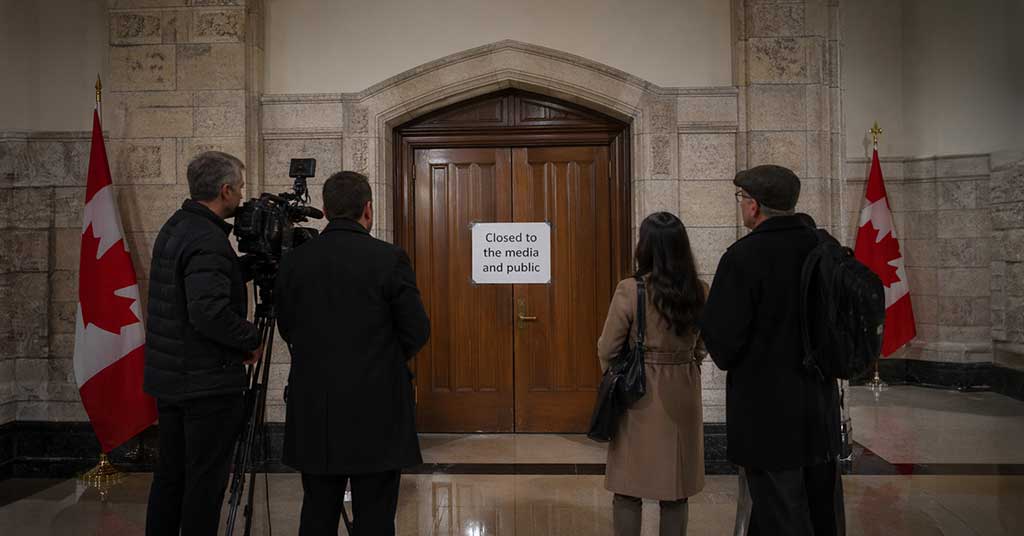
The signing took place at a ceremony on the Musqueam reserve in Vancouver attended by B.C. Premier David Eby. Parliament was not told about the agreements. The B.C. Legislature was not told about the agreements. Journalists were not permitted to attend the signing. Ottawa then posted a brief notice on a government website and made no official available for questions. That sequence tells you everything you need to know about how this government understands accountability.
The agreements cover fisheries, stewardship and marine management, and what Ottawa calls a Rights Recognition Agreement. That agreement recognizes Musqueam Aboriginal title over 533,000 hectares of the Lower Mainland of British Columbia, including federally owned land and infrastructure that Ottawa’s own website describes as “of highly strategic importance to Canada as an economic gateway to the Indo-Pacific.” The agreement also extends that title recognition to provincial, municipal and private land, territory over which the federal government has no jurisdiction.
A fourth agreement, apparently providing the Musqueam Band with a revenue stream from the Vancouver International Airport ground lease, remains entirely withheld from the public.
The language of the three released agreements is impenetrable. Even Premier Eby has admitted he cannot say what they mean. No federal minister has offered to explain them. This is a government that spent ten years negotiating in secret and now answers questions with silence.
The constitutional problems are serious. Canada’s UNDRIP Act, which commits Ottawa to aligning federal law with the United Nations Declaration on the Rights of Indigenous Peoples, does not authorize the executive branch to share constitutional jurisdiction with an unelected body by administrative agreement. The Rights Recognition Agreement does what it appears to do: it shares constitutional jurisdiction by administrative agreement, a workaround that flourishes when governments grow impatient with the constraints of democratic process.
This makes the role of the courts unavoidable.
The B.C. Supreme Court, in a decision by Madam Justice Young, recognized Cowichan Aboriginal title over lands in Richmond, the very lands now covered by the federal government’s recognition of Musqueam title. The Cowichan decision is under appeal. The B.C. government is in its own quiet negotiations with the Cowichan over a financial settlement involving those same lands. Two governments are thus simultaneously dealing in competing title claims over identical territory while the courts have not yet resolved the question. This is what happens when governments decide that patience with legal process is optional.
There is also the question of who benefits. The Musqueam Band is among the wealthiest First Nations in Canada, with a net worth approaching $1.2 billion, annual revenues of $56 million, and a portfolio of over 80 companies and partnerships that include real estate development and fishery enterprises. The federal government has now handed the Band authority over the fisheries and marine sectors in which it already operates commercially, and has recognized title over land its development partners may wish to acquire.
Calling that a potential conflict of interest is, if anything, an understatement. This follows directly from the same failure of process. Ottawa appears to be picking favourites among First Nations, enriching a few with assets and authority while the majority remain trapped in dysfunction and poverty.
None of this is an argument against Aboriginal rights or against the Musqueam people. Rights are worth defending precisely because they impose limits on what governments may do in the dark.
My argument is simpler: consequential decisions about land, resources and constitutional jurisdiction belong in Parliament, in courts, and before the public. They cannot be legitimately settled through secret negotiations, a barred-press ceremony, and opaque documents that Ottawa cannot or will not interpret.
The federal government should rescind these agreements and begin again in public. It should release the fourth agreement. It should table all four texts in Parliament and make officials available to explain them. It should then let the courts finish the work they were asked to do before Ottawa decided to route around them.
Accountability is not a courtesy that governments extend when convenient. It is the price of the authority they hold in trust. This government has not paid it.
Marco Navarro-Genie is vice-president of research at the Frontier Centre for Public Policy and co-author, with Barry Cooper, of Canada’s COVID: The Story of a Pandemic Moral Panic (2023).
Explore more on Aboriginal land claims, Federal politics, Property rights, Aboriginal Politics
The views, opinions, and positions expressed by our columnists and contributors are solely their own and do not necessarily reflect those of our publication.
Troy Media empowers Canadian community news outlets by providing independent, insightful analysis and commentary. Our mission is to support local media in helping Canadians stay informed and engaged by delivering reliable content that strengthens community connections and deepens understanding across the country.

